Jewish Resistance Museum
The exhibition, established in 2007, is located in a former ghetto barrack on Minskaya Street in Novogrudok, Belarus. It tells the story of the most successful tunnel escape in Nazi-occupied Europe and the Jewish partisan detachment of the Bielski brothers (Kalinin Detachment).
The escape from the forced labor camp of a closed type took place on September 26, 1943. The last 232 surviving prisoners of the Novogrudok Ghetto escaped through a 200-meter-long tunnel that they had secretly constructed over a period of four months.
Establishment of the Labor Camp and Living Conditions
The second Novogrudok Ghetto, designated as a forced labor camp of a closed type, was established on August 6, 1942. Approximately 500–600 Jewish prisoners, including women and children, were confined within the camp. They were housed in former courthouse workshops converted into overcrowded barracks.
Initially, the camp held between 500 and 600 prisoners, primarily skilled craftsmen and their families, including approximately 300 women and 32 children. The prisoners themselves built three-tier wooden bunks in the former workshops of the Voivodeship Court building, where they were housed. Between 20 and 25 people lived in each room, with only 65 centimeters of sleeping space allocated per person.
The ghetto was a closed camp. Prisoners worked in workshops located in neighboring buildings and were not permitted to leave the camp grounds. There was no running water within the camp, and the barracks lacked both heating and electricity. Water was brought under guard from a well located outside the ghetto. The supply was sufficient only for drinking and for preparing a thin soup made primarily from potato peelings.
A bowl of soup and 150 grams of bread constituted the daily ration for each prisoner. Following the mass execution of May 7, 1943, during which approximately half of the ghetto population was murdered, the bread ration was reduced to 125 grams per day.
When the labor camp was established, Commandant Wilhelm Reuter prohibited prisoners, under threat of death, from bringing any belongings from the Peresika Ghetto, from which they were being transferred to Korelichskaya Street. Initially, inmates slept on bare wooden bunks. Straw was later provided, and eventually prisoners were allowed to retrieve some belongings that had remained after the massacre of approximately 4,000 Jews on August 7, 1942, provided those items had not already been taken by German authorities or local police.
The camp population included furriers, carpenters, shoemakers, harness makers, tailors, and blacksmiths from Novogrudok, Ivenets, Dyatlovo, Korelichi, Novoyelnya, and other nearby towns, as well as several refugee families from Poland. Each prisoner was assigned an identification number that had to be worn on both the front and back of their clothing.
Every morning prisoners assembled for roll call before reporting to work. They sewed fur collars onto military coats, produced sheepskin jackets and mittens for the Wehrmacht, manufactured saddles and leather straps, tailored suits, shoes, and boots, repaired furniture confiscated from Jewish homes and distributed to Germans stationed in Novogrudok, produced knitted goods, corsets, and dresses for German families, and fulfilled orders from the local population.
Sunday was the only day without regular work assignments and was devoted to cleaning the barracks and camp grounds.
The camp was enclosed by a three-meter-high wooden fence and two rows of barbed wire. Guard towers equipped with machine guns stood at the corners, and a powerful searchlight mounted on the former court building illuminated the camp throughout the night. Twenty-four members of the local auxiliary police guarded the camp around the clock.
Construction of the Tunnel and the Escape
Following the mass execution of May 7, 1943, in which approximately 250 prisoners were killed (323 according to German archival records), preparations for escape began.
The tunnel started beneath the bunks inside one of the barracks and extended approximately 200 meters underground at a depth of about one meter. It measured approximately 65–70 centimeters in both height and width.
The construction of the tunnel and the organization of the escape were directed by Berl Yoselevich, a photographer from Novogrudok. Under the leadership of Berl Yoselevich, a local photographer, they secretly dug a tunnel beneath one of the barracks.
On the evening of September 26, 1943, the escape took place. A list prepared before the escape contained 223 names; today the identities of 232 escape participants are known.
Of those who escaped, 132 survived the war. More than one hundred reached the village of Staraia Huta and the former base of the Bielski partisan detachment near the village of Kamenka, where the Jewish partisan unit had returned after the German anti-partisan operation known as Operation Hermann.
Memorialization of the Tunnel
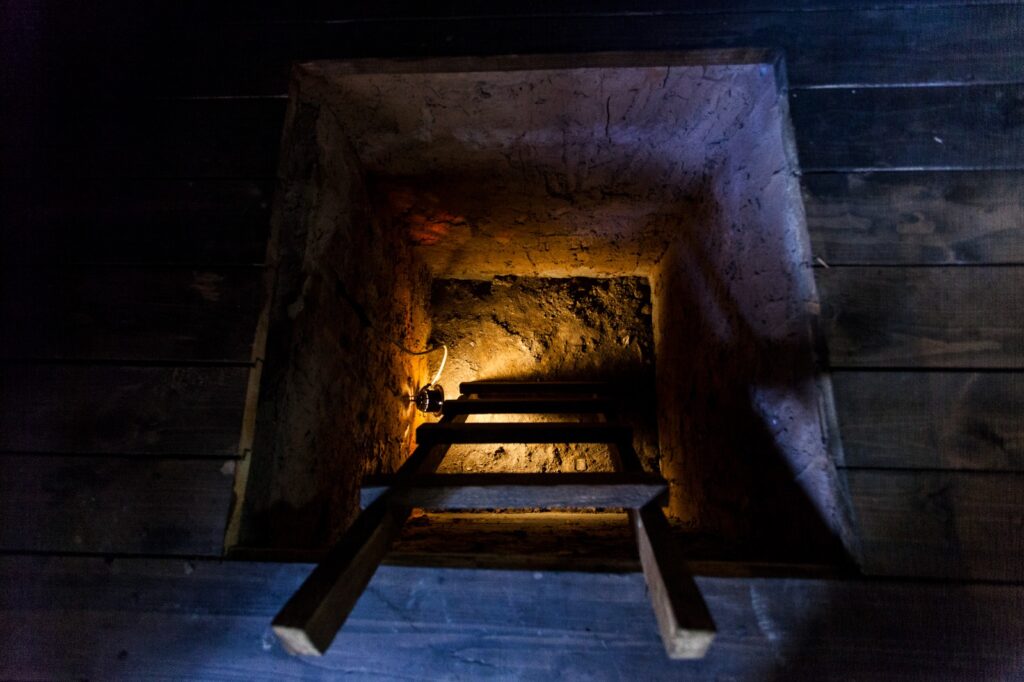
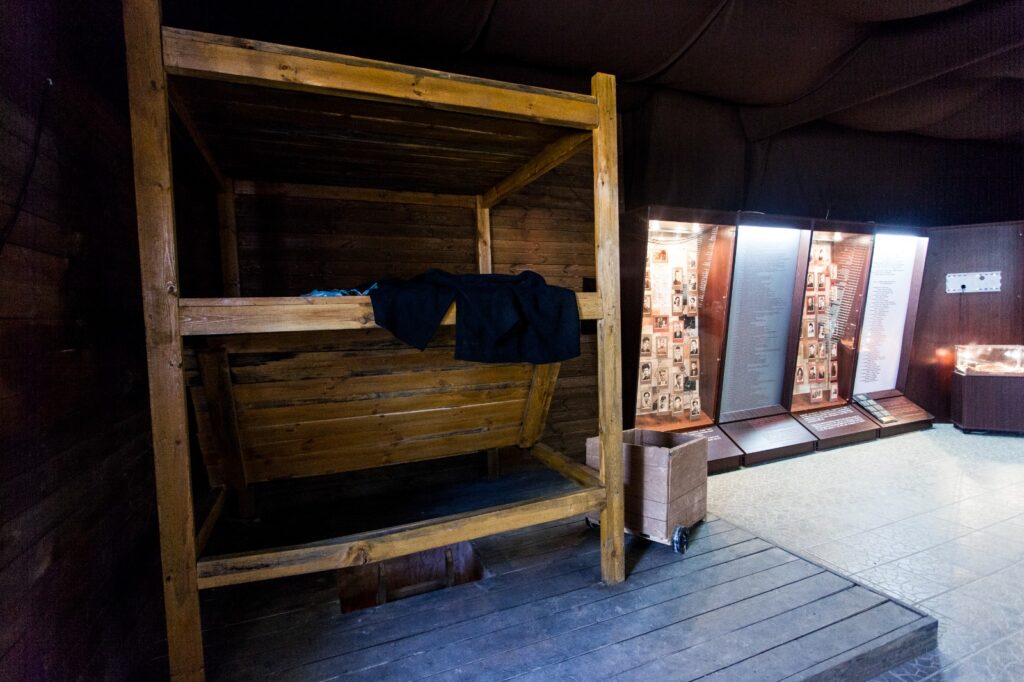
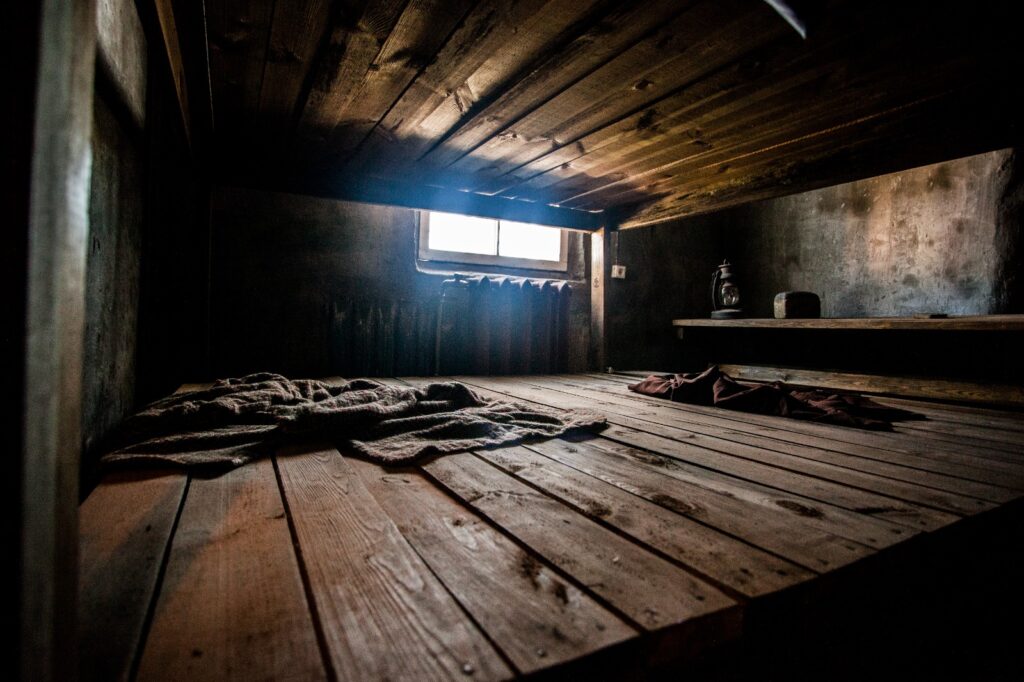
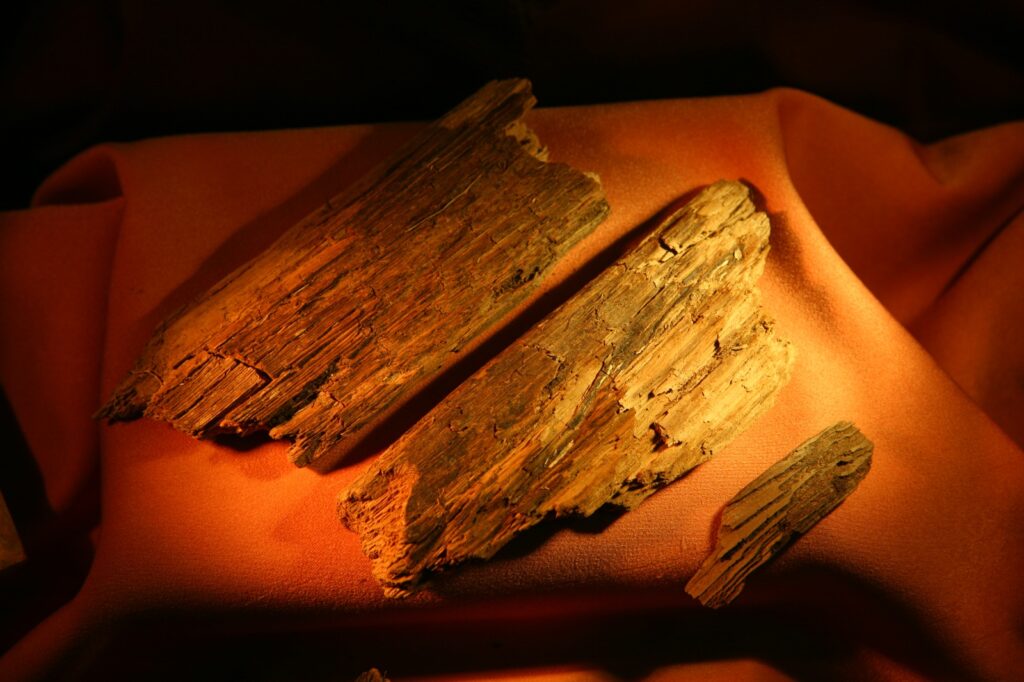
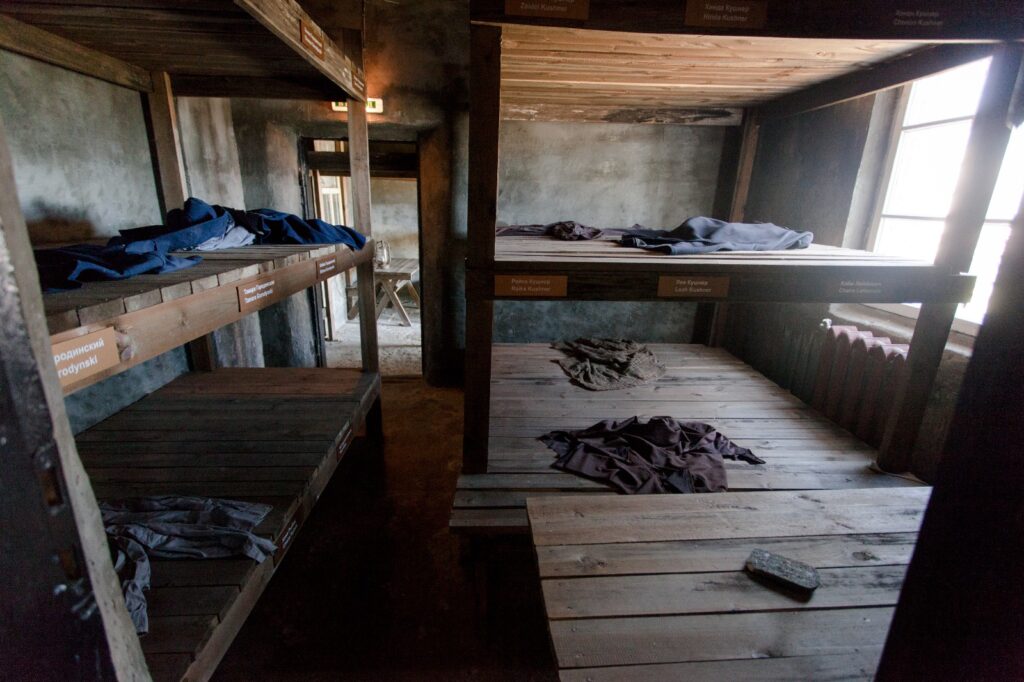
The idea of creating a museum exhibition in the barrack where the tunnel began originated with Tamara Vershitskaya, Director of the Novogrudok Museum of History and Local Lore.
The museum project was realized in 2007 with support from former prisoners, descendants, international organizations, and especially Jack (Idel) Kagan, a survivor of the Novogrudok Ghetto whose family perished during the Holocaust. In 2012, archaeological investigations involving survivors, descendants, and local volunteers helped identify portions of the original tunnel route. In 2013, a preservation project marked the tunnel’s path and established the Garden of the Righteous, honoring individuals who risked their lives to help Jews survive during the Holocaust.
The “Desire to Live” Memorial
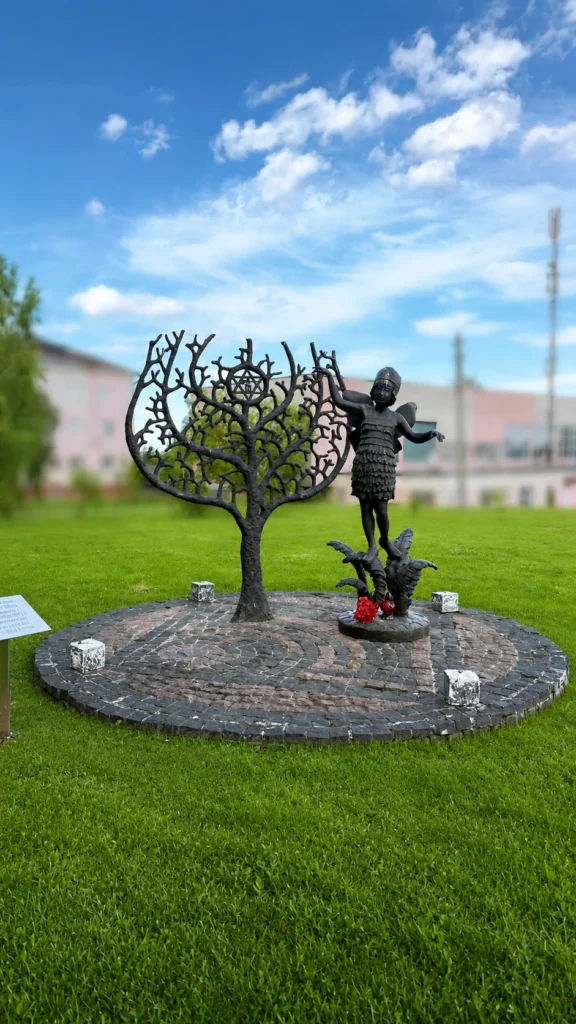
The memorial sculpture “Desire to Live” was unveiled on September 26, 2017. It depicts a young girl dressed as a butterfly beside the Tree of Life.
The sculpture was inspired by Mikhle Sosnowsky, a Jewish girl from Novogrudok who was captured and killed while attempting to escape to the forests and join the resistance.
Created by sculptors Vladimir Panteleev and Oleg Kupriyanov, the memorial symbolizes innocence, hope, courage, and the enduring human desire for freedom and life.
Open-Air Exhibition
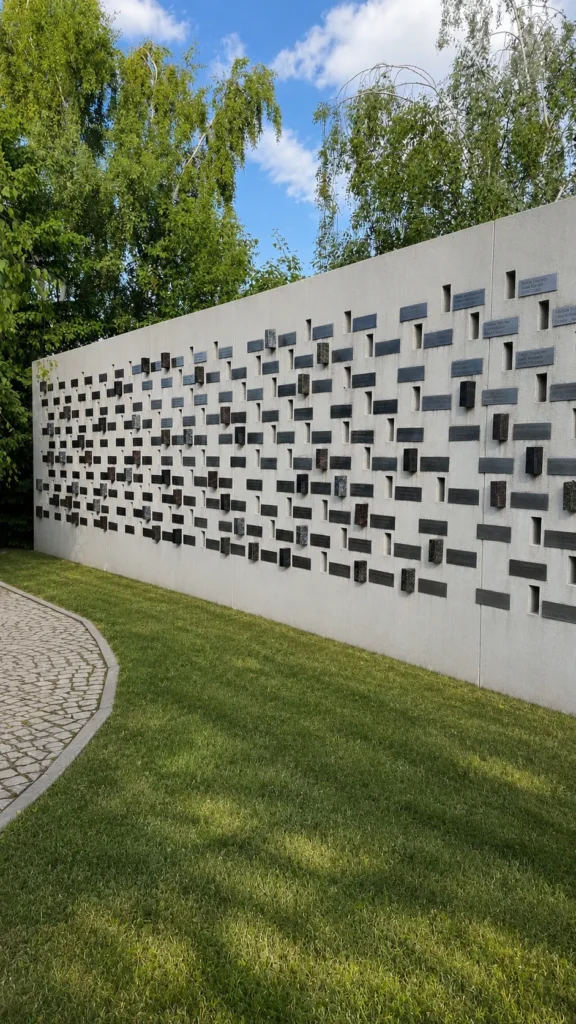
The open-air exhibition “The Story of the Tunnel Escape Told by Its Participants” presents testimonies preserved in the archives of Yad Vashem in Jerusalem and the Jewish Historical Institute in Warsaw.
The Wall of Memory was inaugurated on July 8, 2019, with support from the Cyril and Charles Kushner Family Foundation.
Dedicated to all prisoners who participated in the tunnel escape of September 26, 1943, the memorial features 227 plaques bearing the names of escapees in English, Hebrew, and Russian.
The architectural design was created by Belarusian architect Georgy Zaborsky.
Today, the museum serves as an important center for Holocaust remembrance, education, and the preservation of the history of Jewish resistance in Novogrudok.